- Hawaiʻi Hotel Hui Insider
- Posts
- Waikīkī Dystopia, NYC vs. Hawaiʻi Dirt, and Airbnb Roars
Waikīkī Dystopia, NYC vs. Hawaiʻi Dirt, and Airbnb Roars
Aloha!
Mahalo for being here, and welcome to this month’s Hawaiʻi Hotel Hui Insider.
Big mahalo to our quarterly title sponsor, Allana Buick & Bers. I’ll be honest, before we connected, I only had a rough idea of what they did. After learning more, it’s clear they’re focused on a problem most owners deal with, usually the hard way. In plain English, ABB helps hotels get ahead of mechanical and HVAC issues before they turn into expensive, guest-facing disasters. Their architects and engineers assess what’s actually broken, or about to be, then design and manage the fix. Less firefighting, more planning, fewer surprises.
This month, we’re covering Hawaiʻi’s friendlier tourism reset, a closer look at increased surveillance in Waikīkī, and whether the destination is quietly picking up a fourth “S”: Sun, Sand, Surf, and Surveillance. We also take a close look at Airbnb’s latest swing at the hotel business, which feels familiar, but this time it might be for real.
We often have a point of view with our stories, and we know not everyone will agree. That is why we welcome people to comment publicly on our posts on LinkedIn or send us feedback directly. Who knows, you might end up in our Anonymous Comments to the Editor section.
As a small gift to the Hui, we put together a short, no-fluff AI guide. It’s meant to help you stop rewriting SOPs from scratch, cut through bloated docs, and get something actually useful out of AI. Inside are the prompts and workflows we use to save time.
Do you know we have a website where you can find previous issues and other resources? Check us out at HawaiiHotelHui.com.
If this newsletter is useful to you, share it with someone who might appreciate it! The more perspectives we have, the better. 😉
New here? Join the hui below. It’s free.
Mahalo for sticking with us!
Let’s dive in.
Mahalo,

Dan Wacksman
Hawaiʻi Hotel Hui Insider Editor-in-Chief 😄

Heads in Beds, Hands in Cuffs

One of the more interesting parts of my hotel days was reading the daily security reports. Sometimes amusing, sometimes terrifying, always written in Pentagon-style. I still recall a line that appeared more than once: “Security assisted the individual to the ground for their safety.” Hotel security teams are a distinct breed. I was reminded of that at the recent Visitor Public Safety Conference, put on by HLTA earlier this month.
While I usually focus on heads in beds, not hands in cuffs, the range of topics was eye-opening, from natural disaster preparedness to assisting visitors who are victims of crime (if you’re not familiar with VASH, you should be). But the discussion that really stuck with me was surveillance.
The pitch around drones and security cameras was compelling. The idea is that in a dense, fast-moving environment, a drone could be on scene in roughly 45 seconds, capturing footage well before officers arrive. Layer that on top of calls for more fixed security cameras, more monitoring, and AI, and you start to see a broader shift taking shape. This isn’t just about one tool; it’s about building a much more visible, always-on security and surveillance environment.

I understand why this is attractive. Faster response times, better situational awareness, and safer outcomes for visitors, residents, and officers alike are all legitimate goals. Director Mike Lambert addressed privacy concerns directly, joking that he wasn’t interested in what you had for lunch. I believe him, and I don’t question the professionalism or intentions of the people currently tasked with using these tools. But the harder question isn’t about today’s intentions; it’s about tomorrow’s reach. As cameras, drones, and data collection expand, we should at least pause to ask whether the balance between safety and personal privacy is shifting, and if so, how far we’re comfortable letting it move.
Technology has a habit of moving faster than legislation, and rarely pauses to think through mission creep or unintended consequences. The definition of “appropriate use” slowly expands. More data is stored. More access is granted. While we may all agree with the current intent, that doesn’t mean we’ll always agree with how it’s used. I want safer streets and safer guests in Waikīkī. I’m just not sure I’m comfortable with a more pervasive surveillance environment becoming the price of admission.
The conversation gave me a small-kine chill down my spine.
We Finally Stop Lecturing and Start Selling

After years of "Mālama" and "Kuleana" messaging that occasionally felt like a mandatory homework assignment for visitors, the HTA and HVCB have pivoted with "Hawaiʻi Stays With You." While I am all about Mālama and Kuleana, the sentiment was often lost on visitors. The new campaign, developed by the HVCB, debuted at a Los Angeles Rams game on January 4th.
This campaign signals a move toward high-def imagery and 'Instagrammable' moments and feels less like teaching and more like inviting. It is a pragmatic shift acknowledging that while travelers want a transformational connection, most prefer to find it through swimming, hiking, and eating rather than planting taro. The challenge now is how to amplify this message on a limited budget.
Watch the video that launches the campaign here. What do you think?
NOTE: Since people are often confused by this, here’s a quick clarification. HTA is a state agency now housed within DBEDT and does not do destination marketing itself. That work is contracted out. For the U.S. market, marketing is handled by the Hawaiʻi Visitors and Convention Bureau (HVCB), a private nonprofit.
Locally Rooted Hospitality
-Sponsored-

MacNaughton Hospitality is a full-service owner and operator with a growing portfolio including Waikiki Malia, Lotus Honolulu, Hotel Renew, and Arden Waikiki. Rooted in the MacNaughton family legacy, the platform is built on long-term ownership and hands-on stewardship, prioritizing performance without losing sight of people or place.
Working closely with partners, the team delivers hospitality that is financially sound, operationally efficient, and culturally grounded. Rather than a one-size-fits-all model, they tailor deep expertise in asset management and operations to the unique character of each property. From brand development to daily execution, the focus remains clear: building resilient assets, empowered teams, and guest experiences that stand the test of time.

Airbnb and Hotels: We’ve Heard This Before. This Time Might Be Different.

Airbnb’s hotel ambitions are nothing new. The HotelTonight acquisition in 2019 was widely seen as the turning point, before the pandemic put everything on pause. Now the company is back at it, with a pilot program and senior talent in place. Call me cynical, but the timing doesn’t feel accidental. Short-term rental regulations are tightening across major cities, and Airbnb’s sellable inventory is shrinking.
In test markets like Madrid, Los Angeles, and New York, Airbnb is more aggressively contracting and presenting hotel inventory. The platform appears to be moving toward a more unified accommodations experience. In short-term-rental-starved New York, hotel listings now show up front and center alongside traditional Airbnb inventory.
Airbnb has quietly formalized hotels as a real vertical. Jesse Stein, previously focused on real estate, has taken on a newly created Head of Hotels role, signaling this is now an owned business line, not a side project. Add in Jim Alderman, former CEO of Radisson Hotel Group Americas, now working on hotel supply and growth.
The clearest signal, at least to me, is the hiring of Lou Zameryka, a friend to many in this industry and a loyal Hawaiʻi Hotel Hui subscriber 😁. Lou helped build Booking.com’s hotel business and announced just last week that he is putting aside his entrepreneurial pursuits to focus on growing Airbnb’s hotel business as their new Head of Global Hotels.
Layer in the hiring of CTO Ahmad Al-Dahle, formerly of Apple and Meta, and the AI angle sharpens. Beyond improving Airbnb’s core business, AI could help the company leapfrog the legacy systems that continue to slow hotel distribution.
Recent reports also suggest Airbnb is offering lower commission rates than Expedia and Booking and is not bidding against hotels on Google or metasearch, at least for now😉.
Good luck, Lou, and please keep those commissions low and the marketing organic.
Different Cities, Same Math: NYC vs. Hawai’i
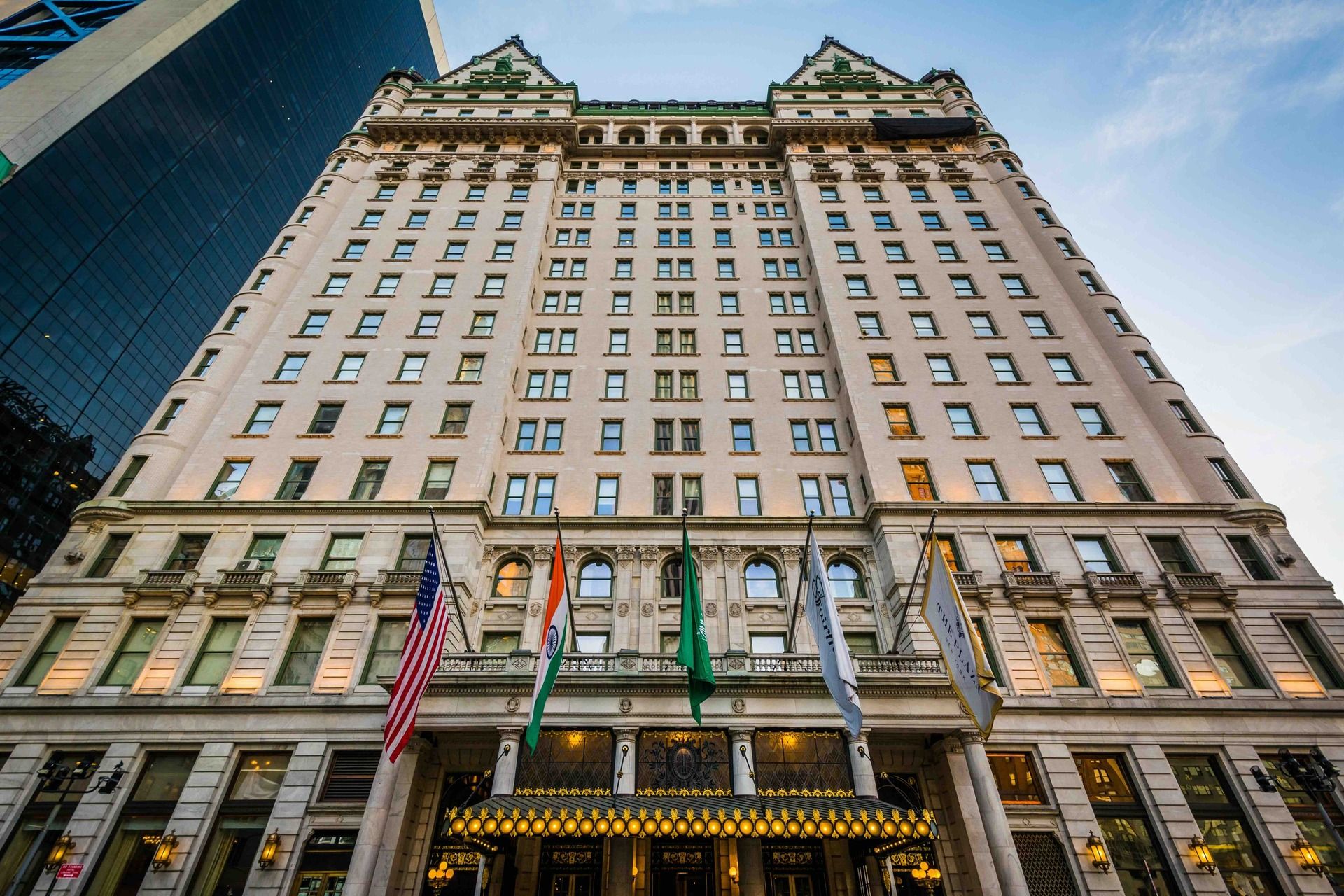
I grew up in New York City. I haven’t lived there in decades, but I still follow the news, and lately some of the tourism headlines feel very familiar in Hawaiʻi.
New York City’s effective ban on most short-term rentals isn’t changing anytime soon. A City Council bill that would have loosened the rules never made it to a vote in 2025. Current rules still prohibit most entire-home/apartment rentals under 30 days. The stated goal is housing protection. The observable impact so far has been a steep drop in legal STR supply, fewer options for visitors, and upward pressure on hotel rates. There is still little evidence that the policy has materially increased long-term housing supply or lowered rents, though supporters would argue it is early or that the effects are difficult to isolate. Sound familiar?
Another Hawaiʻi-adjacent moment caught my eye, too: the recent sale of the land beneath the Lotte New York Palace. Affiliates of Lotte paid $490 million to buy roughly 35,700 square feet of Midtown Manhattan dirt, converting a long-term ground lease into full ownership. That pencils out to about $13,700 per square foot. I’ll admit it, I didn’t even realize leasehold was a thing in New York City. Apparently, it’s not common, but ground leases do exist, mostly tied to long-held commercial and hotel properties in Manhattan. Unfortunately, none of them trace back to the Lenape, who were famously on the wrong side of Manhattan’s original land deal.
Which immediately brought me back to Waikiki.
The land beneath the Royal Hawaiian was traded for $510 million and covers roughly 10.3 acres, or about 449,000 square feet, putting it at about $1,135 per square foot. In other words, Lotte land in NYC traded at 12X Royal Hawaiian Land.
In supply-constrained markets, STR policy will continue to be a debated issue. The long-term value, though, stays with the land.
New York City and Waikīkī don’t have much in common on paper, but scarcity has a way of producing similar results.
It’s time to go all-in on direct.
-Sponsored-

When destination resorts package with air, they can offer more competitive pricing, giving travelers another reason to book direct. Tambourine is helping hoteliers bring the convenience of "one-stop shopping" to hotel websites without handing the relationship (or margin) to an OTA.
Create an OTA experience on your hotel site, smooth shopping, fewer clicks, less friction
Offer a lower overall price through bundled air + stay
Less than 5% cancellation on packaged bookings (because people commit when flights are involved)
The Passport Gap: Easy Out, Hard In.

Did you know there’s a report that ranks passports by how useful they actually are for traveling to other countries? It’s called the Henley Passport Index, and for 20 years, it has tracked the number of destinations to which passport holders can travel visa-free. Singapore tops the list with visa-free access to 192 destinations, while Afghanistan remains last with just 24.
The U.S. passport is still strong, with access to 179 countries. But on the other end, the United States allows just 46 nationalities to enter visa-free, ranking 78th globally for openness. That’s one of the widest gaps between outbound mobility and inbound access anywhere in the world.
Meanwhile, China has quietly moved in the opposite direction, adding visa-free access for more than 40 countries in the past two years and now allowing entry to 77 nationalities. Call it diplomacy, call it economics, or call it demand generation, but openness is increasingly being used as a competitive lever in global travel.
And while the U.S. has not reduced the number of Visa Waiver countries, as we’ve reported in previous issues, it has continued to layer on new requirements that make entry more onerous, even for travelers from Visa Waiver countries (see our December article).
Want to dive deeper? Check out the full 2026 Henley Global Mobility Report at Henley & Partners.

The Netscape Moment: Is ChatGPT Losing the Room?

In the early 1990s, Netscape ruled the browser world until Microsoft bundled Internet Explorer and pulled the market out from under it. Are we starting to see something similar play out in generative AI?
OpenAI’s ChatGPT popularized the category and deserves credit for it. But for those of us using it daily for research, analysis, coding, and document creation, the experience is starting to feel worn. The tool still works, but it increasingly feels like an employee who needs constant supervision.
If I had to correct a human staff member as often as I find myself correcting ChatGPT lately, they would not have made it through probation. Between model drift, inconsistent outputs, and frequent re-prompting, some of the early magic has faded. Meanwhile, Google Gemini has quietly evolved. The interface is cleaner, and in many use cases, the results now feel on par with, or better than, the competition.
Like Microsoft in the 1990s, Google’s real advantage is distribution and integration. By embedding Gemini directly into tools many of us already live in, Gmail, Drive, Sheets, Docs, and Analytics, Google is building a moat that is hard to replicate. And unlike most of its competitors, Google can self-fund this rather than relying on perpetual fundraising and massive losses.
Two recent developments suggest this shift may be solidifying.
First, Apple has confirmed that Google Gemini will be one of the model providers integrated into the next generation of Siri, expected in 2026. Read More.
Second, Google recently introduced its Universal Commerce Protocol (UCP), partnering with Walmart, Shopify, and Target to enable purchasing directly inside Gemini. Read More.
None of this means OpenAI is finished. But if performance issues and user friction persist, history suggests early category leaders are not guaranteed to stay on top. Without meaningful improvements or deeper strategic partnerships, OpenAI risks ending up in the same tech graveyard as Netscape Navigator.
BTW- If you are interested in the Browser Wars, here is a fantastic podcast about it.
Free Resource: Making AI Work for You
Speaking of AI utility, we created a practical resource to help you get more out of these tools right now. We’ve compiled a straightforward, no-nonsense AI guide designed to streamline your workflow; whether that's generating SOPs from scratch or summarizing complex documentation. It includes the actual prompts and strategies we use internally to save time and cut through the noise.

Industry Events
PATA 2026 Annual Outlook & Economic Forecast Forum - February 6, 2026 (Oahu)
HLTA 2026 Na Po‘e Pa‘ahana Awards – February 11, 2026 (Oahu)
The Hospitality Show (AHLA and HHA) - February 12, 2026
*If you have industry events to share, please email me at [email protected].

Spotlight on Hawai‘i Hospitality Opportunities
Vice President Operations, Outrigger (Honolulu)
Regional Director of Marketing & E-commerce – ʻAlohilani Resort Waikīkī Beach (Honolulu)
Area General Manager - Aqua Aston Maui Kaanapali Villas (Maui)
Director, Social Media – OUTRIGGER Hospitality Group (Honolulu)
Vice President, Sales and Marketing – Travel + Leisure Co. (Honolulu)
*If you happen to have any job openings, let us know. We will be glad to include them in the newsletter, space permitting; send the job link to [email protected].

A little lighter on feedback this time, but I’m still happy to get it, praise, complaints, corrections, all of it. We always appreciate hearing what’s landing, what’s not, and what’s making people uneasy.
Praise (We’ll take it!)
“So good. Happy New Year and congrats!”
“Insightful and thought-provoking. 🤔”
On AI, Borders, and the Welcome Mat
“If my experience is representative of a generation age 50 or older, there will be social media accounts that have been dormant for years and where people don’t remember handles or passwords… Will people be denied entry when they don’t list an account and the AI review process kicks in? There is no way humans can review the amount of data.””
“Overall, it will reduce the number of inbound tourists, for Hawaiʻi and for the USA overall.”
“Wondering how accurate AI is in reviewing social media content in foreign languages and different alphabets…”
On the Green Fee and Real-World Impact
“Probably will not see any impact on this so-called ‘green.’”
“My home is turning more expensive and unaffordable.”
On Japan, Pricing, and What the Data Actually Says
“Looking at the development of the USD to Yen exchange rate, from 109 in December 2019 to 155 in December 2025, it is actually surprising to see the Japanese visitor market having recovered as much as it did.”
“Hawaiʻi has to realize that other countries have built competitive products in the last 20 years, which are easier to reach.”
“The closing of DFS stores indicates that businesses are not having a very optimistic outlook.”
Agree? Disagree? Think we’re missing the plot entirely?
Fire back at [email protected], and your take might show up here next issue, anonymously.

About Us
Hawaiʻi Hotel Hui was started by hotel industry veteran Dan Wacksman, CEO of Sassato, a Hawaiʻi-based consultancy that combines deep local expertise with a global perspective.
Our team brings decades of experience across operations, marketing, revenue, tech, and finance, all aimed at helping hotels and travel companies make smarter decisions and move faster. Whether you need additional expertise, extra horsepower, or just someone who thinks like you and moves things forward, we’ve got you. From local independents to global brands, we show up with a no-nonsense, results-focused mindset. To be blunt: we get sh*t done.
Recent projects include brand transitions, system selection (PMS, CRS, CMS — all the acronym soup), implementations, project management, feasibility studies, training, audits, and everything in between.
A lot of organizations deal with stretched teams, siloed processes, and messy tech stacks that quietly stall important work. We fix that. Happy to chat if this hits close to home.